
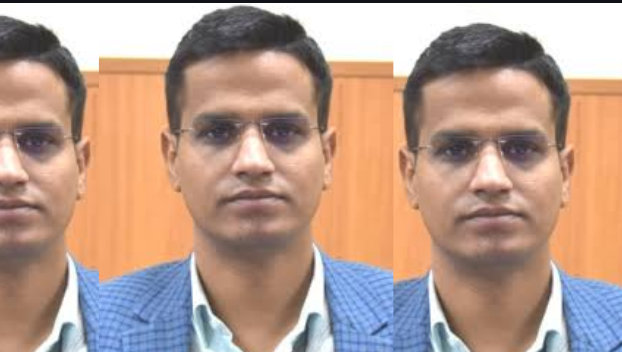
In a city like Gurugram—where glass towers rise as quickly as traffic congestion builds—administration is less about routine governance and more about constant negotiation with growth. At the center of this challenge stands Uttam Singh, an IAS officer whose career reflects a blend of technical thinking and grounded administrative experience.
Appointed as the Deputy Commissioner of Gurugram in 2026, Uttam Singh represents a generation of civil servants tasked with managing India’s most complex urban transformations. His journey, from a mathematics student to a key administrative figure in Haryana, is not defined by dramatic headlines but by steady, evolving responsibility.
Uttam Singh IAS Biography
| Field | Details |
|---|---|
| Full Name | Uttam Singh |
| Date of Birth | January 20, 1987 |
| Age | 39 (approx.) |
| Nationality | Indian |
| Profession | IAS Officer |
| Batch & Cadre | 2015 Batch, Haryana Cadre |
| Current Position | Deputy Commissioner, Gurugram |
| Education | B.Sc. (Mathematics), MCA |
| Marital Status | Married |
| Spouse | Not publicly disclosed |
Early Life and Background
Uttam Singh was born on January 20, 1987, in India, growing up in an environment where education was seen as a pathway to stability and upward mobility. While detailed personal accounts of his early years remain limited, his academic choices suggest a strong inclination toward analytical thinking from a young age.
Choosing mathematics as his foundation was not incidental. It often reflects a mindset drawn to structure, logic, and problem-solving—qualities that later become invaluable in administration. Unlike more conventional pathways into civil services, Uttam Singh’s background in both mathematics and computer science hints at a broader engagement with systems, data, and technology.
This combination would later shape how he approached governance—not just as policy enforcement, but as system management.
Education
Uttam Singh’s educational journey is marked by both depth and adaptability.
He completed a Bachelor of Science in Mathematics from the University of Rajasthan, Jaipur, a course that builds strong analytical and reasoning skills. Rather than stopping there, he expanded his academic horizon by pursuing a Master of Computer Applications (MCA) from Jai Narain Vyas University, Jodhpur.
This dual academic background—mathematics and computer science—places him among a group of administrators who are increasingly relevant in a data-driven governance environment. Whether it is digital infrastructure, smart city planning, or administrative efficiency, such knowledge offers a practical edge.
Career Journey
Entry into the Indian Administrative Service
Uttam Singh joined the Indian Administrative Service in 2015, securing a place in the Haryana cadre. Like most IAS officers, his early career would have involved district-level assignments—often the most formative phase for any administrator.
Here, officers learn the realities behind policies: how schemes function on the ground, how public grievances unfold, and how limited resources must be stretched to meet expanding demands.
District Administration and Early Leadership
Over time, Uttam Singh built his administrative experience through district postings, including serving as Deputy Commissioner in Karnal. These roles are demanding, requiring not only managerial skill but also the ability to respond to crises, coordinate departments, and maintain public trust.
District administration in Haryana, particularly in rapidly developing regions, involves navigating issues like land disputes, infrastructure gaps, and urban expansion. His experience in Karnal likely strengthened his ability to handle multi-layered governance challenges.
Key Turning Point: Appointment as Gurugram DC
In April 2026, Uttam Singh was appointed as the Deputy Commissioner of Gurugram, replacing Ajay Kumar in a significant administrative reshuffle.
This was more than a routine transfer—it was a strategic posting.
Gurugram is not a typical district. It is one of India’s fastest-growing urban centers, marked by:
- Rapid population growth
- Expanding real estate development
- Persistent traffic congestion
- Complex waste management issues
- Increasing demand for water and infrastructure
As Deputy Commissioner, Uttam Singh’s role extends beyond administrative supervision. He is expected to coordinate between multiple agencies such as the Municipal Corporation of Gurugram (MCG), the Gurugram Metropolitan Development Authority (GMDA), and various state departments.
Real-World Impact and Responsibilities
His responsibilities in Gurugram highlight the evolving nature of governance:
- Improving grievance redressal systems for a growing urban population
- Enhancing inter-departmental coordination in a fragmented administrative landscape
- Ensuring implementation of government schemes at scale
- Addressing civic challenges such as traffic, waste, and water supply
Officials have noted that his prior district experience is expected to bring a more structured and disciplined approach to these issues.
In cities like Gurugram, success is rarely immediate. It is measured in gradual improvements—better traffic flow, cleaner neighborhoods, more responsive governance. This is where Uttam Singh’s role becomes both challenging and critical.
Leadership Style and Administrative Approach
Uttam Singh’s leadership appears to be shaped by a combination of technical understanding and administrative pragmatism.
With a background in mathematics and computer science, his approach likely emphasizes:
- Systematic problem-solving rather than ad-hoc decisions
- Data-informed governance where possible
- Efficiency and coordination across departments
In complex urban environments, leadership is less about authority and more about alignment—bringing multiple agencies onto the same page. His role in Gurugram demands exactly that.
Rather than dramatic interventions, his work is expected to focus on creating systems that function reliably over time.
Personal Life
Uttam Singh is married, though details about his spouse and family life remain private. This is consistent with many civil servants who prefer to keep personal matters away from public attention.
There is little publicly available information about his personal interests or lifestyle, reflecting a professional life that remains largely centered on administrative responsibilities.
Net Worth and Earnings
Uttam Singh’s income primarily comes from his position as an IAS officer, including salary, allowances, and official benefits as defined by government norms.
While some estimates place his net worth around $100,000, such figures are not officially confirmed. As with most civil servants, his financial profile is structured and not typically influenced by private ventures.
Conclusion
Uttam Singh’s career illustrates a quiet but important truth about governance: progress is often incremental, and leadership is often invisible.
From his academic beginnings in mathematics and computer science to his current role in one of India’s most demanding administrative districts, his journey reflects steady growth rather than sudden leaps.
As Gurugram continues to expand—bringing both opportunity and strain—his work will likely shape how the city balances development with livability.
In the end, his story is not just about an individual officer. It is about the evolving role of administrators in modern India—where managing growth is as important as enabling it.
FAQs
1. Who is Uttam Singh?
Uttam Singh is a 2015-batch IAS officer from the Haryana cadre, currently serving as the Deputy Commissioner of Gurugram.
2. What is Uttam Singh’s educational background?
He holds a B.Sc. in Mathematics from the University of Rajasthan and an MCA from Jai Narain Vyas University.
3. What is his current role?
He serves as the Deputy Commissioner of Gurugram, a key administrative position.
4. Is Uttam Singh married?
Yes, he is married, though details about his spouse are not publicly disclosed.
5. What challenges does he face as Gurugram DC?
He oversees issues like traffic congestion, waste management, urban planning, and coordination among multiple government agencies
Leave a Reply